The brief
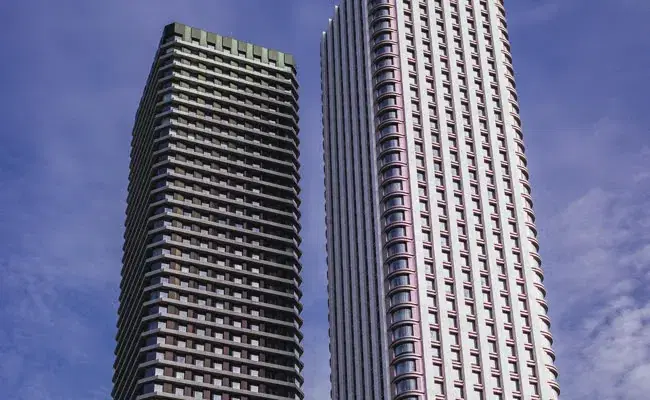
A Grade-A IT/Tech park spans five towers and 10 lakh sq ft of leasable area. The shell-and-core programme had to land on a fixed go-live so anchor tenants could start fit-out without overlap with base-build trades. Anything that slipped past shop-drawing freeze meant on-floor rework, lease deferrals, and penalty clauses.
Why it was risky
Tech parks are the canonical multi-trade build. Structural grids, MEP risers, and core compliance interact with tenant fit-out programmes that arrive in parallel — often from three or four different design teams.
- Structural rigidness: the published grid restricted workstation densities for the largest anchor tenant.
- MEP capacity gaps: the original HVAC and electrical sizing was tuned to legacy office loads, not modern IT density.
- Access bottlenecks: lift count and egress widths were close to the statutory floor — any late change risked an approval reset.
- Fit-out conflicts: ceiling heights and service routes were sized for the base-build, not for tenant design intent.
What Kaël did
Kaël collapsed the timeline between design intent and site decision by running the numbers continuously, every time a drawing or a tenant brief changed.
- Tenant planning simulations ran workstation density studies against the structural grid four months ahead of any tenant signing, surfacing dead-zone risk by floor.
- MEP load analysis compared the design submittals against realistic IT loads — peak, off-peak, and 24×7 operations — and flagged under-provisioning before equipment was procured.
- Compliance checks ran on every revision, keeping parking ratios, lift counts, and refuge widths inside the statutory band.
- Auto-clash detection matched tenant fit-out drawings against the base-build model the day they arrived, so changes were costed in days, not months.
Outcome
Anchor tenants moved into fit-out windows without slippage. Cumulative tenant fit-out delay risk — assessed at 36 months across the five towers — was closed out before commissioning began, and ₹10–18 Cr of late modifications was taken off the change-order register.